It’s been a little while since my last post, and in that time I’ve sat down with a LOT of business leaders across our market. Different industries, different sizes, different challenges — but one message keeps popping up:
“Mike, hiring feels better than it did last year.”
And honestly… they’re not wrong.
The urgency feels lower. Open roles don’t feel as desperate.
In many cases, application flow is up.
Some leaders are even saying, “Maybe the labor market is finally calming down.”
I get why it feels that way.
But here’s the part most people are missing:
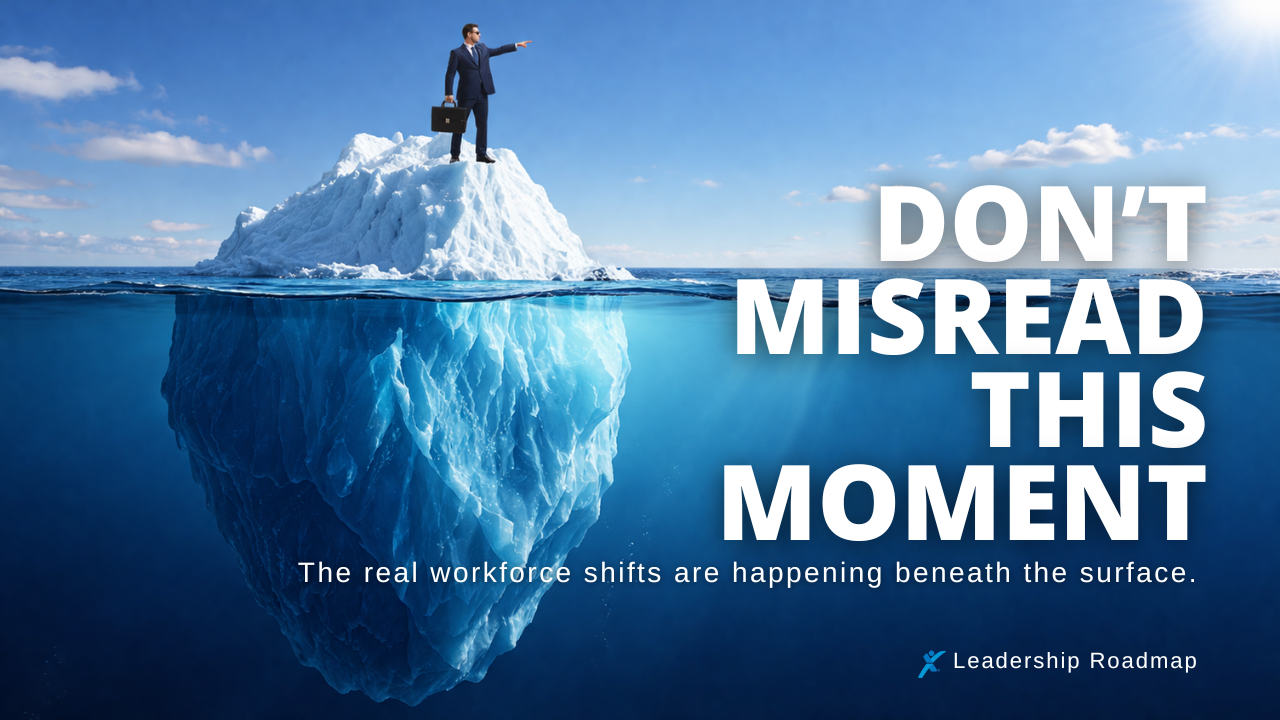
This moment is incredibly easy to misread.
Because the big workforce challenges? They didn’t go away. They just changed form.
In a lot of cases, hiring feels “easier” not because companies are consistently finding stronger talent, but because they are seeing more activity. More applicants. More interviews. More onboarding. More motion.
But more volume does not automatically mean better hiring outcomes.
In many organizations, the challenge is still very real — it is just being masked by the busy work of processing candidates, sorting through applications, and onboarding hires that ultimately do not stick.
Just a couple of weeks ago, Lightcast published Fault Lines, a report that really speaks to what is happening in the workplace right now. One of the more important takeaways is that many traditional recruiting measures just are not working like they used to. A lot of employers are still looking for exact credentials, exact experience, and the “perfect” match — in a market where talent is tighter, skills are shifting faster, and career paths are less predictable than they used to be.
In other words, this is not just a market correction. It is a market being reshaped.
Over the past year, I’ve watched demographic shifts, labor participation trends, turnover patterns, new employee expectations, and the surge of AI all start to reshape the workplace — not loudly, but steadily. Almost quietly.
And from a demographic standpoint, this is where the long-term signal becomes hard to ignore. For the first time in U.S. history, we have reached a point where, without immigration, more people are exiting the workforce due to aging than are entering it. We may not feel the full impact of that today, but the trend is already in motion. It is locked in, and it will continue to build.
That’s what I think makes this moment so important.
When hiring is painful, the leadership challenge is obvious:
- Find people.
- Keep people.
- Keep the operation moving.
When hiring feels easier, leaders start to relax. They let themselves believe the pressure is easing.
But this is actually the moment when leadership becomes more critical.
Because this is the point where organizations either:
A)step back, rebuild strong leadership habits, and strengthen their culture
or
B) drift back into reactive management because the alarms aren’t sounding anymore
And that difference?
It determines who thrives amidst this turbulence and who struggles in the next wave of change.
Last year we talked a lot about agile adaptability — not as a buzzword, but as a real leadership necessity. And this year, it’s showing up everywhere.
Adaptability is the ability to adjust without losing your direction.
To stay clear on purpose while staying flexible in approach.
To lead even when the ground moves under your feet.
And then there’s leadership effectiveness, which is really about influence.
Not authority. Not title. Actual influence.
It’s the trust you build.
The clarity you create.
The conversations you have that prevent fires instead of putting them out.
The coaching that helps people take ownership instead of waiting to be rescued.
Some labor shortages are becoming more structural, not temporary. Skill needs are changing faster. AI is reshaping work, but it is not eliminating the need for people, leadership, judgment, and development.
In many organizations, the challenge is shifting from:
“Can we hire fast enough?”
to
“Can we build, retain, and lead the right talent well enough?”
That is a very different question.
And yet, so many leaders get stuck in the cycle of urgency:
- Fill the job.
- Fix the issue.
- Solve the problem.
- Put out the fire.
- Repeat.
The intention is good. The outcome is not sustainable.
Because urgency creates dependency.
And dependency slows everything down.
That’s why this is the moment to pause and ask:
- Are we leading in a way that builds trust?
• Are we coaching people to think, or training them to wait?
• Are our one-on-ones building ownership — or bottlenecks?
• Are we preparing our people for what’s coming, or just reacting to what’s happening?
These aren’t “HR questions.” They’re competitive advantage questions.
Especially now:
AI is moving fast.
Employee expectations are changing.
Participation patterns are shifting.
Leadership experience gaps are widening.
And many organizations are still trying to lead with habits built for a different era.
This is precisely the moment to lean into leadership, not loosen it.
And if I had to simplify it down to a formula, it would look like this:
Trust + Influence + Meaningful Conversations + Ownership + Clarity + Adaptability = Leaders Who Make an Impact
So here is my takeaway:
Do not let a softer hiring market fool you. The next wave of workforce challenges is already forming. It just does not look exactly like the last one.
The organizations that thrive will not be the ones that assume the pressure is gone. They will be the ones that use this moment to strengthen leadership, build adaptability, develop people, and create healthier cultures before the next wave hits.
What are you doing today to become an employer of choice?
That may be the real competitive advantage moving forward.