The workforce challenge is no longer just a recruiting issue. It is a leadership, retention, development, productivity, and clarity issue.
The Moment Leaders Are In
In many of the conversations I am having with business owners and hiring leaders, one idea has been on my mind: leaders rarely get to wait for perfect information. They have to pause for perspective, then make decisions with clarity.
That is where I believe we are with the workforce. We are not just having an AI moment. We are having a workforce moment.
- AI is changing how work gets done and how teams create productivity.
- Labor supply remains tight because of participation, retirements, demographics, and changing life priorities.
- Skilled help is harder to find, especially in production, manufacturing trades, service, logistics, and technical roles.
- Employees are evaluating work through the lens of flexibility, communication, purpose, trust, and leadership quality.
- Retention is becoming as important as recruiting.

What Has Changed
This is not simply a normal hiring cycle. Some of the pressure is structural and will likely continue shaping business decisions for years.
- Lower labor force participation means fewer people are actively available relative to employer demand.
- Retirements continue to pull experience out of the workforce.
- Hiring has become more cautious and selective, even when companies still need people.
- Employees are less likely to move unless the opportunity clearly feels better.
- Skill gaps are forcing companies to decide what must be hired and what can be trained.

The Leadership Implication
In the past, some companies could overcome weak onboarding, inconsistent supervision, unclear expectations, or average communication because there were more available workers. That margin for error is smaller now.
Every part of the employee experience matters more:
- The first conversation with a candidate.
- The clarity of the role and expectations.
- The onboarding process during the first 30 days.
- The quality of the frontline supervisor.
- The consistency of coaching, accountability, and feedback.
- The willingness to develop people instead of waiting for perfect resumes.
AI Will Raise the Bar, Not Remove the Human Side
AI can improve sourcing, communication, scheduling, training, data analysis, and productivity. But it does not replace the leadership work that creates trust and commitment.
Technology can remove friction, but leaders still have to:
- Set clear standards.
- Build trust.
- Coach performance.
- Create accountability.
- Develop people.
- Connect the work to purpose and customer value.
Retention Is the New Recruiting Strategy
When talent is hard to find, the people already inside the organization become even more important. Retention cannot be treated only as an HR initiative. It has to be a business strategy.
- Do people know what winning looks like?
- Are supervisors equipped to lead people, not just manage tasks?
- Are small issues addressed before they become resignation letters?
- Are strong performers being developed before they become disengaged?
- Are expectations and feedback clear enough to create confidence?
A Practical Leadership Roadmap

Leaders do not need to solve everything at once. But they do need a more intentional playbook.
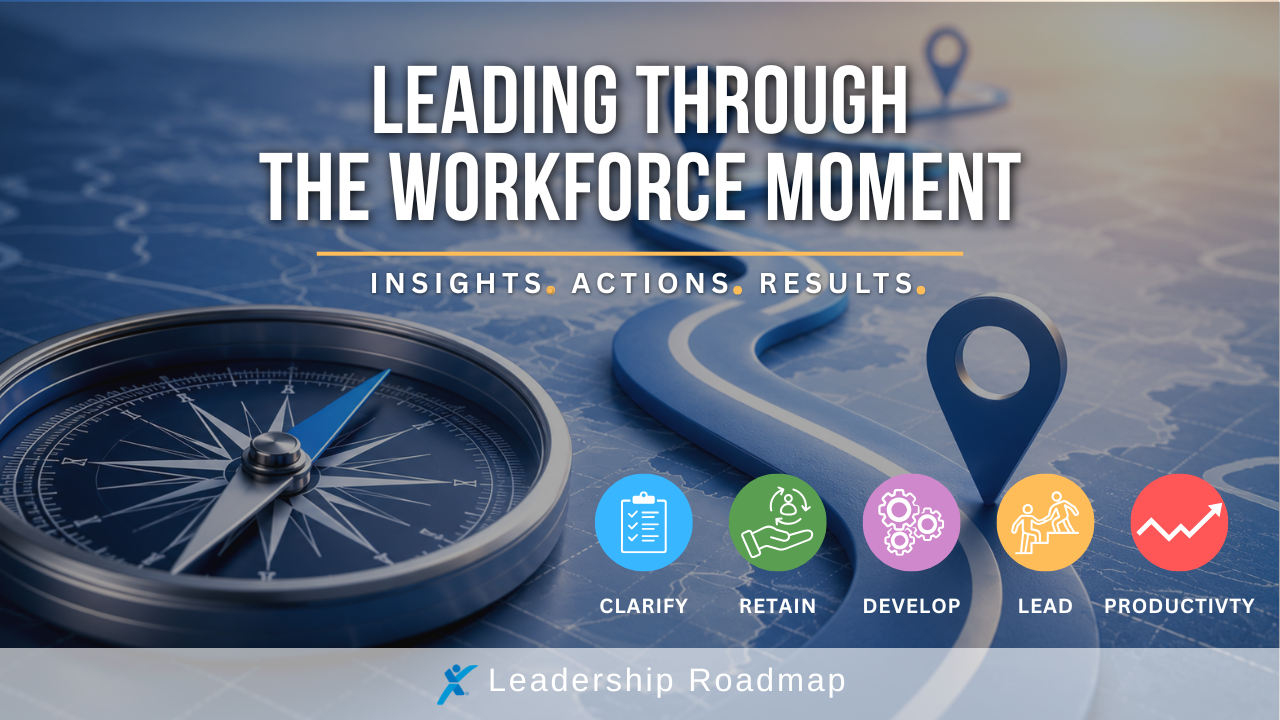
- Clarify: Define success in each role. Separate true requirements from preferences. Make expectations visible.
- Retain: Treat retention as a leadership responsibility. Know who your best people are, what they need, and what could cause them to leave.
- Develop: Build a training system that turns potential into performance. Hire for the right foundation when perfect experience is not available.
- Lead: Equip frontline leaders to coach, communicate, and create accountability.
- Productivity: Use AI, technology, and process improvement to remove friction and help people do higher-value work.
Questions Leaders Should Be Asking Now
- Are we clear on who we are trying to attract and what success in the role actually requires?
- Are our wages, schedules, and expectations aligned with the market we are competing in?
- Is our onboarding strong enough to give people confidence quickly?
- Are we developing people, or just hoping they already know what to do?
- Are our frontline leaders equipped to coach and communicate well?
- Are we using AI and technology to improve productivity without losing the human side of leadership?
- Are we treating retention as part of our growth strategy?
Final Thought
The companies that win the next several years will not simply be the ones with the best recruiting message or the newest technology. They will be the ones that combine better tools with stronger leadership disciplines.
We are having a workforce moment. The question is whether we will lead through it, rather than simply react to it.
Sources and Notes
- U.S. Bureau of Labor Statistics, Employment Situation Summary, April 2026: labor force participation rate 61.8%.
- Federal Reserve Bank of St. Louis FRED, Labor Force Participation Rate (CIVPART), April 2026: 61.8%.
- U.S. Bureau of Labor Statistics, Job Openings and Labor Turnover Survey, April 2026: job openings 7.6 million, hires 5.1 million, quits rate 1.9%.
- McKinsey & Company, Empowering the US workforce, April 2025: demographic pressures, automation, productivity, and reskilling.